
Key Takeaways
- Assisted living offers hands-on help with bathing, dressing, grooming, and daily routines.
- Care plans can shift as mobility needs change over time.
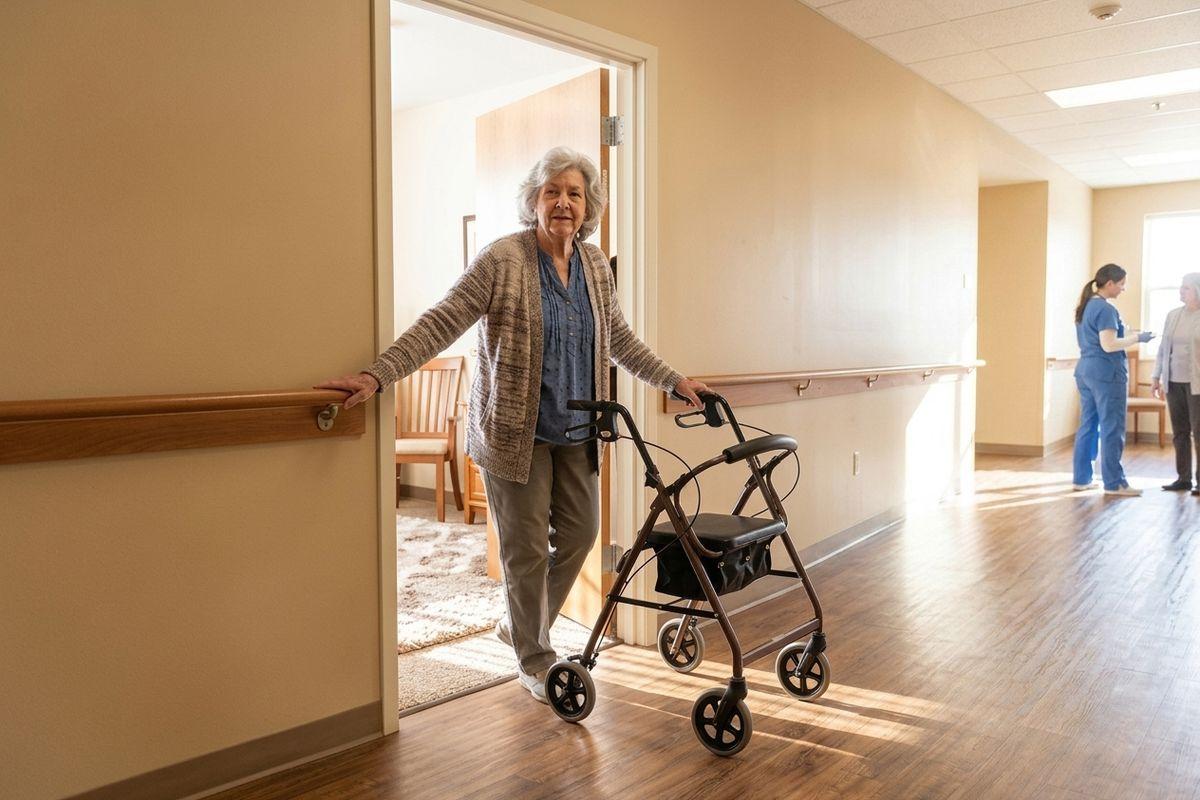
- Walkers and wheelchairs are welcome, and apartments include accessible features like grab bars and wide doorways.
- Emergency call buttons and around-the-clock caregiver add reassurance day and night.
- Seated exercise, accessible dining, and adapted activities keep social life active at any pace.
- Memory care and respite care are available when more support is helpful.
What Support Looks Like When Mobility Feels Harder
Maybe you’ve noticed a parent gripping the counter on the way to the kitchen. Or perhaps you saw them counting how many stairs stand between them and the mailbox. Those small challenges can add up and shrink the world. We at Allouez Senior Living by Frontida see this often. And we’d like you to know that there’s always a path forward that feels comfortable.
Assisted living gives seniors with limited mobility hands-on help with bathing, dressing, walking, and daily tasks. This support is provided within an accessible community designed to respect individuals.
How Assisted Living Supports Limited Mobility
Limited mobility can carry its own challenges. In assisted living, the care team is always glad to help with the parts of the day that have become tiring or difficult. That might mean assistance getting in and out of the shower or buttoning a shirt. The goal is to offer help where it’s wanted, not to take over.
Care plans aren’t set in stone, either. The plan easily shifts as a person’s needs change over time. Support can increase after a rough week or decrease with progress in recovery. Other parts of the plan may include assistance with walking, transfers from bed to chair, and steady daily routines.
Common Mobility Changes to Watch For
Changes often show up slowly. You might notice joint stiffness in the morning, shifts in balance, or muscle weakness. All these challenges can make daily life feel like a chore.
Other signs are easier to spot once you know to look.
- Holding onto walls or furniture while walking through the house
- Avoiding stairs or choosing rooms on the first floor
- Sitting for longer stretches and standing up less often
- Slower recovery time after surgery or an injury
Mobility Aids and Move-In Support
Residents who use wheelchairs, walkers, canes, or rollators are warmly welcomed. And the community is built with those tools in mind.
During move-in conversations, our team talks through what a typical day looks like and what kind of support could be helpful. These thorough conversations pave the way to attentive care and mutual understanding.
Apartment and Community Features Built for Accessibility
Accessibility shows up in the details you’d otherwise have to work around at home. Bathrooms include grab bars, shower seats, and raised seating. It’s our belief that getting ready shouldn’t feel like a balancing act.
Throughout the apartments and shared spaces, you can expect these features.
- Wide doorways that fit wheelchairs and walkers comfortably
- Clear pathways without rugs or cords to navigate
- Nonslip flooring in bathrooms and common areas
- Ramps, and handrails between floors and entrances
- Well-lit hallways that make evening strolls easy
Emergency Call Systems and 24-Hour Support
Every apartment includes a call button, so help is always only a press away. You and your loved one can both rest easy, knowing that trained caregivers are on-site day and night.
Regular wellness check-ins help round things out. Someone always takes time to stop by, say hello, and notice how the day is going. These quiet, little details can come together to build a reassuring picture.
Daily Life, Dining, and Activities With Mobility Needs
A calendar full of activities is only as useful as it is enjoyed. That’s why activities should always be built to serve the residents. Seated exercise and gentle movement classes are part of the regular schedule. This gives residents a simple way to stretch and stay active from a chair.
Dining rooms are open and easy to move through. Tables fit wheelchairs without anyone having to rearrange furniture. On lower-energy days, meals can be brought to the apartment instead. Convenience and comfort remain at the center.
Social Connection at Any Pace
Activities are designed so walkers and wheelchairs never keep anyone on the sidelines. Card games, music afternoons, and courtyard visits all work at our residents’ pace.
When you’re surrounded by friendly faces, friendship can happen in the small moments. It could be coffee with a neighbor or a chat in the hallway. These interactions can all turn into a highlight of a day.

A Tour to Learn More About the Lifestyle
Touring gives you a feel for the place, but good questions give you clarity. Consider asking the following.
- How do care managers assist residents who use mobility aids?
- Which services are included in the fees?
- How often are care plans reviewed and adjusted?
- What happens if needs increase over time?
What Comes Next for Your Family
Safety, support, and independence don’t have to compete with each other. The right community brings all three together. Your loved one deserves to focus on enjoying the day instead of managing it.
Allouez Senior Living by Frontida welcomes you to visit us in Green Bay, enjoy the courtyard, and see the apartments in person. Don’t hesitate to reach out to our team if you have questions. We’re always here to talk through what your family needs and if assisted living fits.